
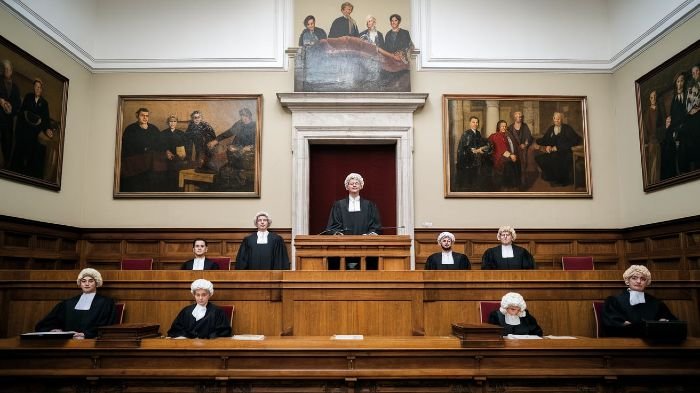
Have you ever asked yourself what are our laws? Quite a number of them aren’t written in a large book. They are based on centuries of court ruling. This leads us to our subject matter What is common law? It is a legal framework that is based on judicial decisions.
Such decisions will have a precedent. It is a breathing living thing in our society. We shall see the manner in which this antique system functions. Why it is so essential, we will see to this day.
There are various elements in our lives that are influenced by this system. It has an impact on individual claims of injury to business agreements. Knowing it makes you perish in this world. You are able to defend your rights better. We shall plunge into the wonderful world of common law.
It’s important to know how to read a legal document effectively to avoid mistakes. The common law system still shapes modern judgments. Students should be aware of the legal rights of students in educational institutions for fair treatment.
History of Common Law
Deconstructing the Concept: What Is Common Law?
Common law is essentially a judge-made law. Think about it this way. Statutes are the laws that are written by the legislatures. They are the regulations enacted by the Parliament or the Congress. But life is complex. Laws cannot deal with all the potential scenarios. This is where the common law intervenes.
A judge is required to make a ruling when a new legal problem is presented. Such a decision is then made into a guideline. New judges examine the decision of the past. They apply it in the determination of similar cases. This provides a stable legal system. It is a tradition system and a system of real-life outcomes.
The Fundamental Principle Precedent and Stare Decisis
A concept known as precedent is the engine that drives the common law system. One of the court decisions of the past is called a precedent. It is the first of its kind. It creates a principle or a rule. This will become the precedent that will be followed by other courts.
There is a fancy Latin name of this practice of following precedent. It is referred to as stare decisis (stah-ray dee-sy-sis). This is an expression of standing by the things that are decided. It guarantees us that our law is foreseeable. It also promotes fairness. Similar people should be given similar results.
Precedent in Action: A Simple Case Study
Suppose a new and a strange case. An individual falls down on one of the drones which has fallen off the sky. The drone was transporting a package. No particular law exists regarding falling drones of delivery. So, what happens?
The harmed individual attaches a lawsuit against the drone corporation. The judge has to decide. Is the company responsible? Both parties are heard by the judge. They take into consideration general safety and duty principles. The judge declares the liability of the company. They ought to have enjoyed improved safety.

The decision has been made a precedent. A case resembling this occurs ten years after. A drone collapses and injures another individual. The case of the first will be examined by the new judge. Due to stare dicca, they are likely to make the same ruling. The legislation has evolved without any newly written law. In further detail, the liability is discussed in our guide on Understanding Legal Liability.
The History of Common Law
Where Did It All Begin? A History of Legal Philosophy
The history of common law is a protracted one. It transports us to the time approximately a thousand years ago. It began in England following the Norman Conquest in the year 1066. Prior to this, law in England was a shambles. It was a patch of regional traditions.
Everything changed under King Henry II who reigned in the 12 th century. He desired a harmonized legal system. He dispatched his judges to go around the country. Cases would be heard and decisions made by these judges. They developed a common law of the whole kingdom. This was in lieu of the uneven local regulations.
The Diffusion of a Legal Tradition
The legal system of the British Empire expanded as the empire did. The colonists of England introduced common law. They brought it to the North America, Australia and India. They took it to most parts of Africa and Asia. This is the reason why most of the countries today share the common law system.
It was adapted to needs of each country. An example is the United States which came up with its own version. Following American Revolution, the English common law principles were still applied in American courts. With time, they established their precedents. This formed an American common law.
Life of the law has not been logic; it has been experience. – Oliver Wendell Holmes Jr., Supreme Court Justice in the United States.
This is the most renowned quote that best describes common law. It is not all about abstract rules. It is regarding the way such rules are implemented. It gets to know and learns with real-life situations and experiences.
The Great Divide in law: Common Law v Civil Law
A Tale of Two Systems: Common Law vs. Civil Law
The world is generally divided into two major legal systems. We have the common law system. The second significant contender is the civil law system. It is important to have a sense of the difference. It demonstrates the reason our legal world has such an appearance.
What is the common law, then, if common law is made by the judiciary? We will consider the other side of the coin of the law. It is an entirely new method of justice.
The World of Civil Law
The Civil law system is still older. It traces back to Roman law. It is based on extensive legal codes. Imagine them as huge, comprehensive manuals. These codes are written to encompass nearly everything by the legislatures. Between contracts and crime, it is all on paper.
This is not the case in a civil law system. They are supposed to locate the appropriate section of the code. They then use it to apply to the case in question. They are investigators rather than arbiters. Their rulings do not make other judges bound by their decisions.
Key Differences at a Glance
The differences may not be apparent. Nonetheless, they immensely affect justice functioning. The key differences are disaggregated in this table. It simplifies the process of making the comparison.
| Feature | Common Law System | Civil Law System |
|---|---|---|
| Primary Source of Law | Judicial decisions (precedent) and statutes. | Comprehensive, codified statutes (codes). |
| Role of the Judge | Umpire or referee. Creates binding precedent. | Investigator. Applies the existing code. |
| Trial Process | Adversarial (two sides argue their case). | Inquisitorial (judge leads the investigation). |
| Use of Precedent | Stare decisis makes it binding. | Used for guidance, but not binding. |
| Legal Training | Focus on case law and legal reasoning. | Focus on learning and interpreting the codes. |
In this table, there are two very contrasting philosophies. One has a respect of tradition and judicial wisdom. The other values the completeness of legislation. Another article that you may find useful here is our article on Beginner’s Guide to Legal Terms.
Legal Systems around the World
Which of these systems is more popular you may ask yourself? The legal system map is very heterogeneous. Here’s a general breakdown.
Global Legal Systems Grid
| System Type | Key Characteristics | Example Countries |
|---|---|---|
| Common Law | Judge-made law, precedent is key. | United States, United Kingdom, Canada, Australia, India |
| Civil Law | Codified laws, judge as investigator. | France, Germany, Spain, Japan, most of Latin America |
| Mixed System | A blend of common and civil law. | South Africa, Scotland, Louisiana (USA), Quebec (Canada) |
| Religious Law | Law based on religious texts/traditions. | Saudi Arabia, Iran (often mixed with civil law) |
As you see, civil law is geographically more extensive. But the effect of common law is tremendous. This is particularly the case with global business and finance.
Laws vary globally, as seen in tenant rights in the U.K. and Canada. Staying updated on taxation law changes can save time and money. Families should also understand the difference between custody and guardianship when dealing with child matters.
The Perennial Strength of Common Law

Why Do we still use a 1,000-year-old system?
We are in a modern world which is fast-paced. Why not use such an obsolete system then? The answer is simple. There are some peculiar strengths of the common law system. These strengths make it remain relevant and powerful. Not only is it an ancient relic it is a vibrant instrument.
Strength 1: Flexibility and Adaptability
Society is always changing. New technologies emerge. Social values evolve. Common law system is able to embrace these changes. It is able to do this without the legislators taking action. New issues can be handled by the judges when they come up.
Consider our case of the drone. A solution to this was soon one in common law. It may require a legislature years to enact a “Drone Injury Act.” The courts can fill that gap. This is a massive benefit to its flexibility. It enables the law to be in touch with human invention.
Strength 2: Consistency and Predictability
This can be considered a contradiction. What is the way it can be flexible and predictable? The key is stare decisis. It is adherence to precedent, which implies that the law is fixed. Lawyers are able to counsel their clients with confidence. They are able to examine previous cases in order to forecast.
This predictability is crucial to business. Personal planning is also a vital issue. It generates a conducive atmosphere. Companies and people are aware of their position. They are aware of their rights and duties. This builds confidence on the judicial system. An example that can be used is how the courts treat negligence to define your insurance requirements.
Strength 3: Sealing the Gaps in the Legislation
No code of written laws can be ideal. Legislators cannot consider all the possible cases. Laws tend to contain ambiguous wording. Or they may not even tackle a certain problem. Here common law really comes into its own.
These are statutes that are interpreted by judges. They explain the meaning of the words in the real world. They also make law where none exists. They occupy the loopholes in the statutory framework. This renders the whole legal system complete. It makes sure that one has an answer to every law question.
To get to know more about the process of making laws, you may access the official U.S. government site on How Laws Are Made. This is an external resource which is very contextual.
What the Common Law Leads You to Believe your Everyday Life
It is All Around You: The Action of Common Law
You might not realize it. However, the principles of the common law influence you every day. They are not only to be used by lawyers and in court. Most of the interactions are based on them. They guard you in a manner which you may not have imagined. We shall consider some specific examples.
The Notorious Case of Marriage by common law
It is a word that most individuals are familiar with. But it’s often misunderstood. A marriage formed out of license and ceremony is known as a common law marriage. It is not being accepted universally. It is still permitted in only a few states and countries.
There are some conditions that should be met where it exists. The couple has to make an appearance to the world as a married couple. They should have plans of getting married. And they must live together. This is an ideal case of a legal status that was entirely made by the precedent rather than by law.
Myths and Realities of Common Law Marriage
People are so confused about this subject. There is a widespread legend that seven years of living together makes you automatically married. This is false. A few myths are demystified by this table.
| Myth | Reality |
|---|---|
| “Living together for X years makes you married.” | No specific time period creates a common law marriage. It’s about intent and public presentation. |
| “It’s recognized in all 50 U.S. states.” | False. Only a small number of states recognize it. (e.g., Colorado, Texas, Iowa). |
| “We have a ‘common law divorce’ if we split up.” | There is no such thing. You must get a formal, legal divorce just like any other married couple. |
| “It gives you fewer rights than a formal marriage.” | If a common law marriage is legally established, you have all the same rights and responsibilities. |
Your Personal Safety and Negligence
Did you ever notice a sign which declared Wet Floor? That is there due to common law. Common law relies on the concept of negligence. It is that somebody owed a duty to act with care. They failed in that duty. And your being hurt at their failure.
You may be sued on negligence in case you fall in a store. Your attorney will make the case on precedent of thousands of similar cases. These cases have made it clear what reasonable care entails to a store owner. This is an effective consumer protection instrument. It sees to it that businesses do consider your safety.
Justice is the consummate of government. It is the end of civil society. It was and still is sought until it is secured, or freedom lost in the seeking. – The Federalist Papers, No. 51
This quote puts us into remembrance of the end. The legal system such as common law is in place to seek justice. Such principles as negligence are a practical means of accomplishing that.
The Way It Molds Your Contracts
By signing a contract you are getting into a world governed by common law. Such is the case with a job offer or a lease or a business deal. Most important principles of contract are a result of centuries of judicial judgments.
As an illustration, what constitutes a valid contract? Judges created such concepts as offer, acceptance, and consideration. What should be done in case one of the terms of a contract is ambiguous? Precedent will assist judges in interpreting it in a fair manner.
This offers a predictable structure of all agreements. That is why, it is so important to read your insurance policy. Its interpretation in a dispute will be subject to the common law principles.
Criticisms and Problems of the System

Knowing the rule of law helps you handle legal issues with confidence. If your spouse refuses divorce, understanding your rights is vital. Business owners should also learn the legal responsibilities of a company director to stay compliant.
Is the Common Law System Flawless?
There is no system that is free of flaws. Common law system has had its fair share of criticism. It is very strong, but there are its possible weaknesses. It is more balanced when we are aware of these challenges. We shall discuss some of the typical criticisms.
The Danger of “Bad” Precedent
The best strength of the system may also be a weakness. What will happen to a judge who makes a bad decision? What in case a decision is wrong or made on false premises? That bad decision can be traced years due to stare decisis. It has the ability to bring a sequence of injustices.
It is possible to overturn an undesirable precedent. A higher court can do it. As an illustration, the U.S. Supreme Court is capable of overruling the decisions made in past. However, this is not a quick and easy thing. Good precedents may take a long time before they are overturned.
The Slow Pace of Change
Although common law is flexible, it is also quite sluggish. It evolves one case at a time. It may fall behind a fast change in society. In some cases, a legislature must intervene. It might have to enact an over-riding new legislation to deal with an emergency issue.
As an instance, consider environmental protection. The common law at an early stage was not able to deal with the extensive pollution. It was difficult to find a single polluter to blame the destruction of an ecosystem.
The result of this was some ground breaking laws such as The Clean Air Act and Clean Water Act. These laws offered a wider solution that was quicker.
Complicatedness and Expert Requirement.
Common law is often very complex because it is founded on the centuries of cases. Locating the applicable precedent involves a lot of research. It needs to have access to legal databases and libraries. This renders the law more inaccessible to the common man.
You always have to have a lawyer to know about your rights. This can be expensive. With a civil law, it is sometimes possible to simply read the applicable code. Common law is complex and many people find it a hindrance.
It is capable of establishing an access to justice imbalance. To explore further the research of the law, you may want to visit places such as the Legal Information Institute of Cornell Law School. It is a wonderful non-profit-making legal information source.
Future of this Old System
What Next of the Common Law?
The world is evolving at a greater rate than it ever was. But what will become of a medieval system? The future of common law system is a controversial subject. Technology and globalization present new challenges to it.
The Effect of Artificial Intelligence
Artificial intelligence (AI) is set to interfere with the juridical landscape. Artificial intelligence has the ability to process cases in thousands of seconds. It is capable of identifying precedents at a very fast pace than a human being. Are lawyers and judges going to be replaced by AI?
Probably not. However it will alter their functions. Artificial intelligence can be an effective research instrument. It may assist lawyers to develop superior arguments. But the last judgment act involves human attributes.
It involves compassion, morality and fairness. The use of AI as a tool in common law is also likely to be introduced, rather than the human wisdom itself.
Trend of Global Harmonization
In the globalized world, companies work across the borders. They are forced to work in both common and civil law. This has caused the impetus of harmonization. This involves bringing the rules of law closer to each other.
We are witnessing an amalgamation of systems. The common law countries are enacting more prescriptive laws. There is a tendency of civil law nations to accord more emphasis to judicial rulings. The boundary between the two systems can keep being blurred. This would bring about a more foreseeable international legal framework.
The Continual Conversation with Statutes
Common law has a future with the statutory law. Both systems are not adversaries. They work together. The general guidelines are established by legislatures. The courts then refine, interpret and apply such rules.
It is the dynamism of this dialogue that makes the system so strong. The gaps will still be filled by the common law. It will change according to new challenges. It will give the finer texture of broad strokes drawn by the legislation. It will be an indispensable source of our rights and protections.
Tying It All Together: The Persistence of Common Law
So, what is common law? It is much more than a stale legal term. It is an active and breathing system. It is constructed using the wisdom of generations of judges. It is a system that respects experience, offers a consistency in form of precedent, and gives the flexibility to see the changing world.
Since its birth in medieval England, it has conquered the world. It is opposed to the code-based civil law system. It influences our everyday life in the purchase of personal safety to the contracted documents.
Although it has faced its problems, its merits have helped it to survive almost a millennium. It will always be a pillar of justice, fairness and predictability in the ever-changing unpredictable world. It is a tale that is being told, case by case.
Frequently Asked Questions (FAQs)
And the United States is mainly a common law country. The state of Louisiana is the only exception and it has a mixed system due to its heritage of the French civil law.
The difference is principally the source of law. In common law, the law is based on judicial decisions (precedent), and in civil law, it is based on extensive written legislatures codes enacted by parliaments.
Yes. A previous decision of a lower court may be reversed by a higher court. Its decisions can even be overruled by its highest court (such as the Supreme Court), but this is not common.
Yes–but in an extremely small number of states and countries only. It takes more than just cohabiting and you must have intentions of being married and portray yourselves as a married couple.

