
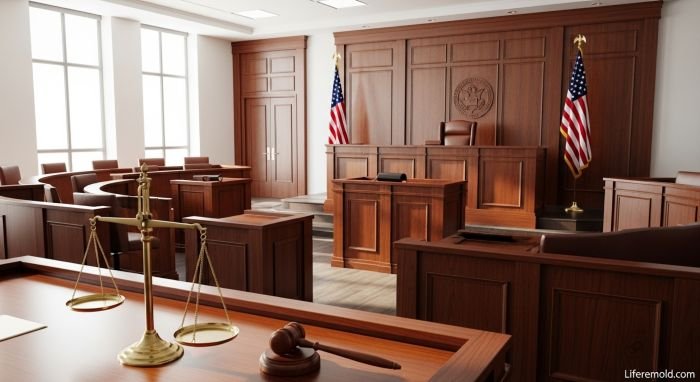
Have you ever thought of what happens in court? Being before a court or just wondering what happens during a court case, knowing what to expect in a court case will save you time and stress. We are on hand to guide you through each of the steps all the way to the end.
The very process of court cases may appear to be daunting. But don’t worry. As soon as you dissect it, you begin to see that it is very logical. We will break down all the details in a simple manner since the moment we filed the first document till the moment we heard the final verdict.
The American Bar Association says that millions of cases pass courts every year. All of them have certain legal procedures, which guarantee the rights of all. Regardless of being a criminal case or a civil case, there are steps that are similar to each other.
Delayed justice is justice denied. Knowing the workings of the court guarantees that you will be upheld during the court proceedings.
Legal Maxim
Laws vary globally, as seen in tenant rights in the U.K. and Canada. Staying updated on taxation law changes can save time and money. Families should also understand the difference between custody and guardianship when dealing with child matters.
What is a Court Case?
Defining Legal Proceedings
A legal case is a form of formal legal action. It occurs when parties fail to settle disputes on individual basis. Many reasons may make you require court intervention. These may be criminal, contract-related or personal injuries.
Courts are an impartial venue of justice. They adhere to set rules and procedures. Each person receives an equal opportunity to make his argument. The judge or the jury then renders their decision using evidence and law.
Types of Court Cases
Cases in Civil and Criminal Courts
Civil cases are controversies that are between individuals or organizations. These could be divorce, property or contract problems. The aim is either compensation or specific performance.
Criminal cases deal with the government prosecute an individual on grounds of illegal deeds. Such situations may lead to fines or jail. Criminal procedures are usually more stakes.

Table 1: Civil Cases vs Criminal Cases – Major Differences.
| Aspect | Civil Cases | Criminal Cases |
|---|---|---|
| Who Files | Private party or organization | Government/State |
| Purpose | Compensation or resolution | Punishment and public safety |
| Burden of Proof | Preponderance of evidence (51%) | Beyond reasonable doubt (99%) |
| Possible Outcomes | Money damages, injunctions | Fines, probation, imprisonment |
| Right to Attorney | Not guaranteed | Guaranteed if can’t afford |
| Examples | Divorce, contracts, property | Theft, assault, murder |
Pre-Filing Stage: Before the Court Case
Exploration and Researching
Investigation precedes filing something. In a criminal trial, the police gather evidence and question the witnesses. They develop a case against the suspect gradually.
In civil cases, you will collect papers and facts. This could be in form of contracts, emails or photos. It is through your attorney that you determine evidence.
Demand Letters and Negotiations
Demand letters often initiate many civil disputes. Your attorney forwards this to the other side. It defines your complaints and ideas on how to resolve them.
This is sometimes a courtless resolution. The other party may also be willing to negotiate. This will save time, money and stress to everybody.
Statute of Limitations
You cannot take your time to make a case. The statutes of limitations are time limits that are attached to each legal proceeding. They are different depending on cases and jurisdiction.
In the case of personal injury, it could be 2-3 years. Common average life span of contract dispute is 4-6 years. Failure to make these deadlines can permanently bar your case.
Step 1 – Filing the Case

Writing the Complaint or Petition
In the court case, filing is the official beginning of the case. This document in case of civil cases is referred to as a complaint. It defines your allegations on the defendant in a straightforward manner.
There are particular details that you should incorporate in your complaint. This comprises the names of parties, the basis of jurisdiction and relief. Your lawyer makes sure that everything is right up to date.
Criminal Charges and Indictments.
The process of criminal cases is different to the one of civil cases. The prosecutor prosecutes or wants to indict. The evidence may be first reviewed by a grand jury.
The charging document gives the particular crimes charged. It should be definite on what the laws have been violated. The defendant is provided with a copy of such charges.
Filing Fees and Court Costs
It is regrettable that it is expensive to file a case. Depending on their jurisdictions and the type of case, court charges differ. They can range from $100 to $500 or more.
In case you cannot afford fees, you may apply a waiver. Forms of indigent litigants are given by courts. You will have to demonstrate your fiscal need.
Chart 1: Courts Filing Fees per case on average.
Fee Ranges — Horizontal (Min → Max)
Step 2 – Serving the Defendant

What is Service of Process?
Once you have done this, you need to inform the defendant in writing. This is referred to as service of process. It makes them aware of the lawsuit against them.
Service provides the opportunity to defendants. It is a constitutional right of being notified. In the absence of receiving appropriate service, there is no way the case can move forward.
Methods of Service
There are a number of service approaches and they differ across states. Personal service is where the documents are hand-delivered to the defendant. This is the surest approach one can get.
Certified mail can also be used occasionally. Or you could employ the services of a professional process server. In some jurisdictions, the service is made by way of publication in newspapers.
Proof of Service
Once you have served the defendant, then you offer evidence in court. This paper confirms their reception of the papers. The server makes an affidavit about the service.
In the absence of this evidence, your case can be held up. Courts must ensure that they are certain before going any further. Store all service documentation.
Knowing the rule of law helps you handle legal issues with confidence. If your spouse refuses divorce, understanding your rights is vital. Business owners should also learn the legal responsibilities of a company director to stay compliant.
Step 3 – Defendant’s Response
Answer or Motion to Dismiss
The defendant has a short amount of time to react. Typically, the days following service are 20-30. They may make an answer or motion to dismiss.
Each of the allegations in the complaint is answered. The defendant either confesses, refutes or says that he or she lacks sufficient knowledge. Affirmative defenses could also be raised by them.
An appeal to dismiss claim is that the case ought to be dismissed. This can be attributed to jurisdictional problems or lack of legal adequacy. And if granted your case might be closed.
Embargoes and Mutual Claims
Plaintiffs are usually counterclaimed by defendants. At this point, these are distinct claims in the same case. They have to be associated with the same event or transaction.
Cross-claims are claims that are filed against co-defendants. These make the litigation cumbersome. These are other claims that have to be addressed by all.
Default Judgment
What can be done in case the defendant is silent? The court can issue you a default judgment. This is a win to you since they have not participated.
Defaults may, however, be laid aside. The defendant has to demonstrate good reason as to why they missed deadlines. Courts are more disposed to dealing with cases on their merits.
Step 4 – Discovery Phase
What is Discovery?
Discovery is the exploration stage of the legal action. There is the exchange of information and evidence on both sides. This will guarantee transparency and avoid unexpected situations during trial.
The discovery may be in months or years. It can be the most protracted in a case. But it gets both parties straight in their facts.
The discovery is the great equalizer in litigation. It guarantees that the truth is made available to both parties prior to entering the courtroom. – Trial Attorney Principle
Types of Discovery Tools
Interrogatories
Written questions one party transmits to another are called interrogatories. The receiver has to respond under oath. These assist in the collection of raw facts as well as the identification of the witnesses.
You can normally dispatch 25-50 interrogatories. The number is restricted by the courts to check abuse. There is also a time of 30 days to provide answers.
Requests for Production
These requests are pursuing documents and physical evidence. You may demand contracts, emails, photos or medical documents. The other party has to come up with pertinent materials.
Electronic discovery (e-discovery) is becoming more frequent. These comprise emails, text messaging and social media. It is also important to retain digital evidence in current cases.
Depositions
A deposition is an oral testimony that is sworn. Prior to trial, the attorneys question witnesses. Everything that is said gets recorded by a court reporter.

Depositions assist lawyers to determine the credibility of witnesses. They also commit trial testimony. Whenever a person changes his/her story in the future, you can impeach him/her.
Requests for Admission
Such requests are requesting the other party to acknowledge facts. They streamline problems and reduce controversies. Admitted facts are not required to be proved before a court.
In case a person fails to respond in time, facts are considered to have been admitted. This may have a considerable effect on your case. These requests always need a well-considered response.
Table 2: Comparison of Discovery Tools.
Discovery Disputes
There is always disagreement on the need to discover. One party may not be willing to forge documents. Or they say that it protects information under attorney-client privilege.
As such, when this occurs you submit discovery motions. It is up to the judge to determine what is to be produced. Such confrontations may increase time and cost.
Step 5 - Pre-Trial Motions

Motion to Summary Judgment
In this motion, the court is being requested to make a non-trial decision. You say that there are no real factual differences. The legislation is evidently on your side.
With it, you are entirely or partially successful in the case. In case of refusal, the case goes to trial. These motions are only granted by judges with caution.
Motions in Limine
These movements deal with what the jury can observe. You may want to suppress prejudicial or other irrelevant evidence. Before the trial commences, the judges determine them.
Limine motions make the trials very smooth. They do not allow the attorneys to refer to omitted evidence. This safeguards the jury against bad influence.
Pre-Trial Conferences
Pre-trial conferences are conducted by courts to be ready to trial. Both sides are negotiated by judges on settlement possibilities. They also deal with procedural matters and schedules.
A lot of cases are solved at such conferences. Resolution is often encouraged by the judges in order to conserve the court resources. Settlement eliminates the risk of trial results.
Grid 1: Timeline of Pre-Trial Motions.
Step 6 - The Negotiation Over Settlement

Mediation
Mediation is an act where a third party, who is a neutral party, assists in negotiating. The mediator does not make the decision of the case. They are effective in communication between the parties.
Most of the courts mandate pre-trial mediation. It is not costly as compared to a trial. And you are the determiner and not a judge.
Arbitration
The process of arbitration is more formal than the process of mediation. Evidence is presented to an arbitrator who makes a decision. This ruling could be binding or non binding.
It is a contract that cannot be court-based but rather arbitrated. This can accelerate the solving of disputes at a high rate. But you forfeit your rights to jury trial.
Settlement Agreements
The great majority of the cases are settled before trial is begun. Settlement save time, money and confusion to all. The two parties come up with terms that they can agree.
The settlement agreements should be written. They must respond to every claim and they must put the liability to rest. When signed they become legally binding contracts.
U.S. Courts state that between 95 and 95 percent of civil cases are settled out of court. This brings out the significance of negotiation skills.
Chart 2: Ways of case resolution.
Step 7 - The Trial

Jury Selection
In case you ordered a jury trial, the process of jury selection is first. This is referred to as voir dire. Lawyers interrogate prospective jurors regarding their prejudices and lives.
Jurors can be challenged by each side on a case by case basis. They also receive perfunctory challenges without any reasons. This is aimed at ensuring the jury is selected fairly and impartially.
Opening Statements
The case starts with opening statements. The plaintiff or the prosecutor is always the first. They lay out what they are going to demonstrate in court.
These are not arguments or evidence as such. They are blueprints of the future. Opening statements are good enough to be noticed by the jury at the very beginning.
Presentation of Evidence
Plaintiff's Case
In civil trials, the plaintiff presents his/her case first. In crimes, the first to go is the prosecution. They subpoena witnesses and admit physical evidence.
Every witness is directly examined with his or her attorney. Cross-examination of the opposing side then follows. This puts the credibility and accuracy of the witness to question.
Defendant's Case
When the plaintiff is asleep, then the defendant gives evidence. They are able to bring their own evidence and witnesses. Or they may depend upon cross-examination.
Criminal defendants are not required to provide testimony. Fifth Amendment secures against self incrimination. Juries cannot put silence against them.
Rebuttal Evidence
The defendant could leave and then the plaintiff could bring rebuttal evidence. This is a response to emerging concerns in case of defendant. It should be restricted to rebuttal particularly.
Closing Arguments
Attorneys also do closing arguments after all evidence has been presented. These are argumentative and persuasive unlike the opening statements. Lawyers recapitulate facts and tell reasons why they are supposed to win.
The first defense is presented by the plaintiff or prosecutor. The defendant then gives the closing argument. Lastly, plaintiff receives a short period to argue.
Jury Instructions
The jury is instructed by the judge in law. These jury instructions interpret legal norms that they have to follow. They outline the burden of proof that is needed as well.
Lawyers have disputes regarding how to instruct a jury. It is the judge who determines instructions to be given. Unprofessional prescriptions may be appealed.
Jury Deliberation and Verdict
The jury then goes into a private session. They also appoint a foreperson to facilitate the discussion. They analyze evidence and bring facts under law.

In criminal trials decisions should be unanimous as a rule. In certain states, civil cases could permit the majority to vote. After they have arrived at a verdict, they report to the court.
The jury comes back to the court in a public manner. The foreperson presents the verdict to all the individuals present. Jurors are then requested to poll the judge.
Grid 2: Trial Process Flow
It’s important to know how to read a legal document effectively to avoid mistakes. The common law system still shapes modern judgments. Students should be aware of the legal rights of students in educational institutions for fair treatment.
Step 8 - Post-Trial Motions
Motion to Review Judgment Notwithstanding the Verdict
This could be a motion made by the losing party. It is referred to as JNOV (judgment non obstante veredicto). You claim that the punishment was not backed by evidence.
Honestly, judges seldom award such motions. They defer to the decisions of the jury as long as they are not evidently unreasonable. Nonetheless, there is need to defend legal rights sometimes.
Motion for New Trial
This motion requests that the court should order a retrial. You can claim a jury misconduct or error of evidence. Or that the verdict cuts across the evidence weight.
New trial motions are also not easy to win. There is a preference of finality in courts. Yet blatant mistakes are circumstances to be forgiven.
Step 9 - Sentencing and Judgment

Civil Judgments
In civil litigation, damages or relief are granted by the judgment. This may be in form of money, property or injunctions. A court passes an official judgment document.
This decision is recorded as soon as possible. It may impact on credit reports and background checks. And it lasts many years generally.
Criminal Sentencing
Sentencing occurs once guilty verdicts are made in criminal cases. The judge takes into account diverse issues when giving punishment. These are the severity of crime, criminal history, and the effect of the victim.
The sentences may be in prison, probation, fines or even community services. There are ranges of statutory discretion that are often enjoyed by judges. Certain types of crimes are required to have minimum sentences.
Restitution and Damages
Restitution is frequently ordered by the courts in criminal cases. This reimburses the victims at a personal level. It is not the same as the payment of fines to the state.
In civil litigations, damages are compensatory to the victor. They could be compensatory (real losses) or punitive (punishment). The sum is based on trial evidence.
Step 10 - Appeals Process

Notice of Appeal
In case of any loss, you may appeal the decision. You have to appeal within a short period of time. There are rigid deadlines normally within 30-60 days of judgment.
Failing to meet the deadline is tantamount to loss of right of appeal. In this case, late filings are seldom excused by the courts. And use the services of a lawyer right after losing.
Appellate Briefs
The appeals process is concerned with legal errors and not facts. It is impossible to add new evidence on appeal. You claim that the trial court erred in making legal errors.
The two parties present elaborate written briefs. This is the case of legal issues and arguments. The appellate courts look at these briefs keenly before making decisions.
Oral Arguments
Oral arguments are sometimes presented by attorneys. This allows the judges to pose questions related to the case. It does not occur in all the appeals.
The arguments typically should last 15-30 minutes each side. There is a lot of interrupting of the judges and hypothetical questions. It is very unlike the proceedings in the trial courts.
Appellate Decision
The appellate court passes a written opinion. They may confirm, reverse or remand the case. Affirming implies that the initial ruling would be made to stand.
Reversal implies that the court of appeal does not agree with it all. Remand relays the case to further proceedings. In part they sometimes combine these.
Step 11 - Enforcement of Judgment

Gathering Money Judgments
Being found right does not necessarily get you money. You should take up by yourself the losing party. This may be difficult in the case they do not have resources.
Wage Garnishment
The wages of the debtor are garnishable in a great number of cases. The employer deduces a part of his or her salary. This will go until the debt has been paid up.
H3: Bank Levies and Property Liens.
You may impose the bank accounts of the debtor. Or may put liens on their property. When they sell it, you are paid at the first.
Contempt Proceedings
In case a person disobeys a court order, then you can file contempt. The judge is able to impose a fine or even jail time. This promotes adherence to court verdicts in a very effective manner.
Special Considerations of Court Cases
Small Claims Court
Small claims court handles minor disputes under specific dollar amounts. Usually, this is 5,000−5,000−10,000 depending on your state. The process is simplified significantly here.
Small claims do not require a lawyer when you are not going to a court. Machinery is low key and fast in comparison to conventional court. Trial occurs in a matter of a few months.
To learn more regarding the small claims procedures, go to California Courts.
Family Court Proceedings
The cases that are dealt with in the family court include divorce, custody and child support. Such cases are normally touching on feelings and relationships. The major attention of the courts is taken on the best interests of children.
Cases involving a family may involve mediation or parenting courses. The court proceeding can take months. The changes may be registered when the situation changes in the future.
Bankruptcy Court
False cases of bankruptcy are governed by the federal statute. They are either liquidation or reorganization of debts. The procedure leaves debtors out of the collection process in the meantime.
Some debts cannot be discharged by the creditors. The bankruptcy is handled under the watch of a trustee. The majority of the bankruptcy cases are over in 3-6 months.
Federal vs State Court
It is important to know which court has the jurisdiction. Federal courts deal with federal law infringement and some civil cases. The criminal and civil cases are mostly heard in state courts.
In certain cases, both courts are collaborating at the same time. This is referred to as concurrent jurisdiction. The considerations of strategy determine the choice of court.
How Long Does a Court Case Take?
Factors Affecting Case Duration
There are various aspects on which length of court case depends. The complexity of cases, the backlog of the court, and the schedule of attorneys are important. Controversies in discovery may increase months or years.
Cases that are simple could be solved within 6-12 months. Corporate litigation may take up 3-5 years with ease. Criminal cases tend to proceed quicker than those that are civil.
Ways to Speed Up Your Case
My organization is always a good way to make cases go through. Immediately respond to discovery requests in their entirety. Take settlement into account in order to prevent trial delays.
Always collaborate in court schedules. Do not seek unnecessary continuances wantonly. This is also greatly influenced by efficient attorneys.
Costs of Going through Court
Attorney Fees
Legal representation is the biggest expense usually. Attorneys charge 150−150−500+ per hour depending on experience. Complex cases can cost 50,000−50,000−500,000 in fees.
In some instances, some attorneys operate on contingency. They only get paid if you win. That makes the legal representation more affordable.
Court Costs and Filing Fees
Beyond attorney fees, court costs add up quickly. Filing fees, service costs, and deposition expenses accumulate. Expert witnesses can charge 300−300−1,000 per hour.
There are court reporters, copying expenses, as well as travel expenses. These are other litigation expenses that should be budgeted. They may surpass the attorney expenses in complicated cases.
Hidden Costs
Do not forget about off-duty time. Your appearance before the court is necessary several times. This lost revenue can be significant among others.
Everyone is also subjected to emotional stress. The relationships and health are subject to the uncertainty and conflict. These are much real intangibles.
How to Be a Successful Navigator of Court Cases

Hire a Qualified Attorney
Do not attempt to handle the serious cases alone. The experienced lawyers are familiar with the process and tactics of court. They defend your rights and make you the most likely to win.
Law firms are critical during the hiring of research attorneys. Test their experience with your type of case. Read the reviews and request the references of former customers.
Document Everything
Record in detail all the details of your case. Retain the emails, letters and text messages. Record pictures and videos of any applicable evidence.
Make a chronology of what goes on. This will assist your attorney to have a clear cut idea of the facts. Cases are often either broken or made by good documentation.

Be in Touch with Your Attorney
Be in constant touch with your lawyers. Act immediately to their information requests. Ask questions when you are not getting something.
You see your lawyer can not read your mind. Immediately, inform them of new developments. Effective communication will result in improved cases at all times.
Be Patient and Realistic
Criminal cases are timeconsuming, regrettably. The gears of justice move at a slow pace but with a purpose. Be realistic with goals and deadlines.
It is impossible to promise specific results by an attorney. There is a certain risk and uncertainty in every case. Believe in the process and leave it to your attorney.
Take Settlement International
Never turn down a settlement offer. There is no guarantee of this when it comes to trial results, no matter what your case is. Settlement gives everyone the stability and final settling.
Objectively weigh costs and benefits in this case. There are occasions when doing less today is better than waiting a few years in future. Your lawyer will be able to assist you in considering offers in a proper way.
How to avoid making common mistakes in court cases.
Missing Deadlines
Judges are very strict and have little empathy in terms of time limits. Failure to meet a filing deadline is sufficient to ruin your case. Make reminders and keep order in process.
Publicity of Your Case
Never talk about your case on social media. Anything you put on can be used to work against you. It may be that even the so-called private messages can be found in court.
Your social media is tracked by the opponent. They seek discrepancies and harmful confessions. Any legal proceedings should always be done in silence.
Lying or Exaggerating
Always be honest to your attorney. They require the factual data to reflect you in an accurate manner. Falsehoods will be uncovered and kill your reputation.
Nor exaggerate injuries or damages either, however inviting. Sometimes insurance companies research extensively through the service of a private investigator. Case dismissal may occur due to getting caught lying.
Ignoring Court Orders
Court orders are not recommendations that one can disregard. Any breach of them will time a charge of contempt. This could involve penalties or prison.
In case you are not able to meet an order, inform court as soon as possible. Justify the position and demand a change. When you speak in an appropriate manner, courts are likely to be reasonable.
Your Rights at a Court of Law.
Right to Counsel
You can request the services of an attorney in criminal cases. In case you are not in a position to pay one, a court appoints one. This is a right that the Constitution guarantees.
Civil cases do not typically provide provided appointed counsel. You may speak on your behalf, although this is not advisable. Legal system is complicated and technical by nature.
Right to Remain Silent
You need never testify against yourself. This is a basic right that is guaranteed by the Fifth Amendment. In a criminal case, a silence would not be counted against.
Rights to Confront Witnesses
The sixth amendment provides the right of cross-examination of witnesses. You have to call them to court where they will be questioned. This provides an evidence reliability against you.
Right to a Fair Trial
You have the right to a neutral judge and jury. The trial should be carried out in accordance with all the legal procedures. Any discrimination or inappropriateness is appealable.
Conclusion: How to make it through the court system.
Knowledge on the procedures of court case gives you a lot of power. Since filing up to the appeal, every stage has its purpose. The process upholds the rights of all but seeks justice in a fair way.
Admittedly, a court case is sometimes cumbersome and costly. They tend to be very demanding and emotionally exhausting to all parties. But when one knows what to expect there would be more less anxiety.
This guide will hopefully guide you through legal proceedings with a lot of confidence. You need to know whether you are a plaintiff, whether you are a defendant, or whether you are just a curious person. Keep in mind to seek the assistance of experienced lawyers regarding a particular law.
The reason why the court system exists is to settle disputes amicably. It gives order and justice in conflict resolution. It takes patience, preparation and proper representation to make it through this process.
Each case is different and it has its difficulties. However, the basic steps of the court are uniform in all jurisdictions. This roadmap includes instructions on the legal journey.

Frequently asked questions (FAQs)
The majority of cases require 6 months to 2 years. Cases which are complex may take 3-5 years or more.
Yes, however, not serious cases. The lawyers are familiar with the processes and legislation.
The judge can declare a default judgment on you. Or they may put a bench warrant out.
Costs vary widely from $5,000 to $500,000+. It is based on the complexity and length of cases.
Yes, by motions to dismiss or summary judgment. Cases are also terminated before trial by settlement.

